MIRRORS
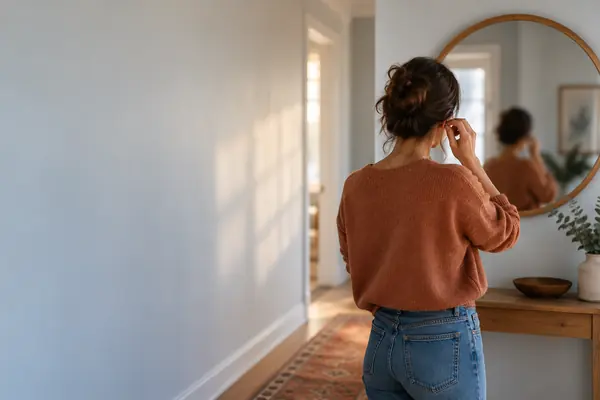
You know the flipped you
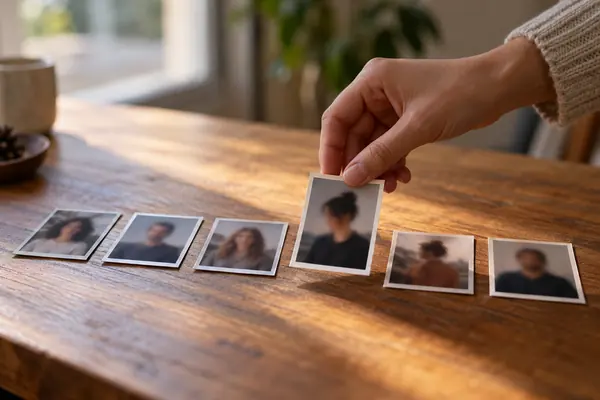
In a 1977 study, people preferred photos showing their mirror image, while their friends preferred the true, unflipped image of them.
Check a photo doodlephotos
WHAT THE RESEARCH SAYS
Most of us know our own face only from the mirror.
Check a photo
FLIPPEDis what you know
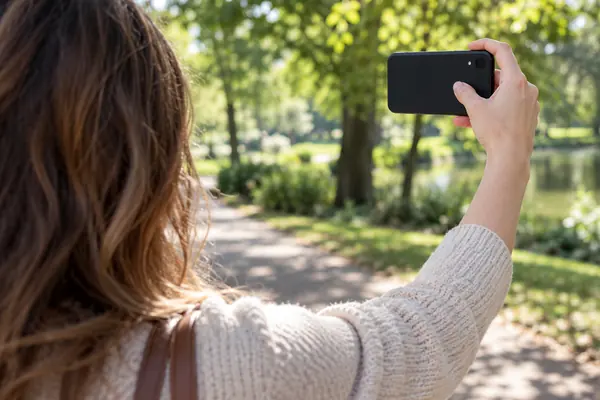
A mirror shows your face flipped left to right. A photo shows it the way everyone else sees it. Add a camera held at arm's length, and the face in the picture can feel like a near stranger. Research explains both effects.
At a glance
≈ 30%
Wider-looking nose at 12 inches
Ward and colleagues calculated a 30% increase in perceived nose width for men and 29% for women at 12 inches, compared with a distortion-free projection. At 5 feet there was essentially no difference.
SELFIE DISTANCE · WARD 2018
610
People in two online studies
Across two internet-based studies with 610 people, images chosen by strangers gave more favourable impressions than images people chose of themselves.
PROFILE PICTURES · WHITE 2017
TWO NUMBERS WORTH KNOWING
One figure on selfie distance,
one on the size of the profile picture studies.
In a separate set of experiments, Epley and Whitchurch (2008) found people were more likely to pick an attractively enhanced version of their own face from a line-up as the real one.
A QUICK PHOTO CHECK
Pick a kind of photo to see what research says about how it shows your face. The bar shows how unfamiliar it is likely to look to you.
Based on Mita and colleagues (1977) as summarised in Psychology Today, Ward and colleagues (2018) and White and colleagues (2017).
THE SHORT ANSWER
Three findings that explain
why a photo of you can feel off.
MIRRORS
In a 1977 study, people preferred photos showing their mirror image, while their friends preferred the true, unflipped image of them.
Check a photoDISTANCE
A 2018 model found that at 12 inches a selfie makes the nose look about 30% wider relative to the face. At 5 feet the effect all but disappears.
See the numbersCHOOSING
In two studies of profile pictures, photos picked by strangers gave better first impressions than the ones people picked of themselves.
Try it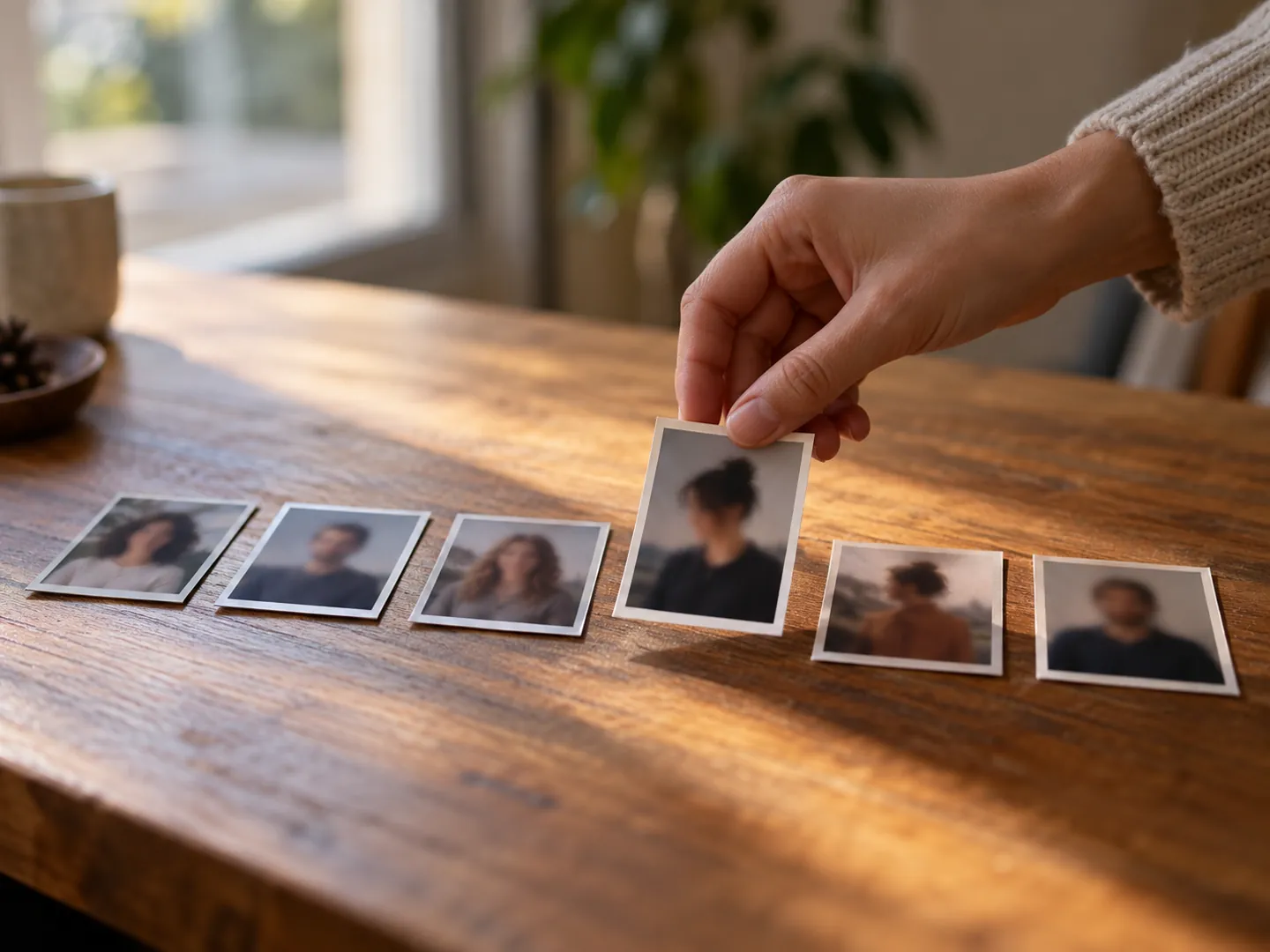
FOUR THINGS TO TRY
None of these needs new equipment. They work with the two effects above: how familiar a view is, and how far the camera sits from your face.
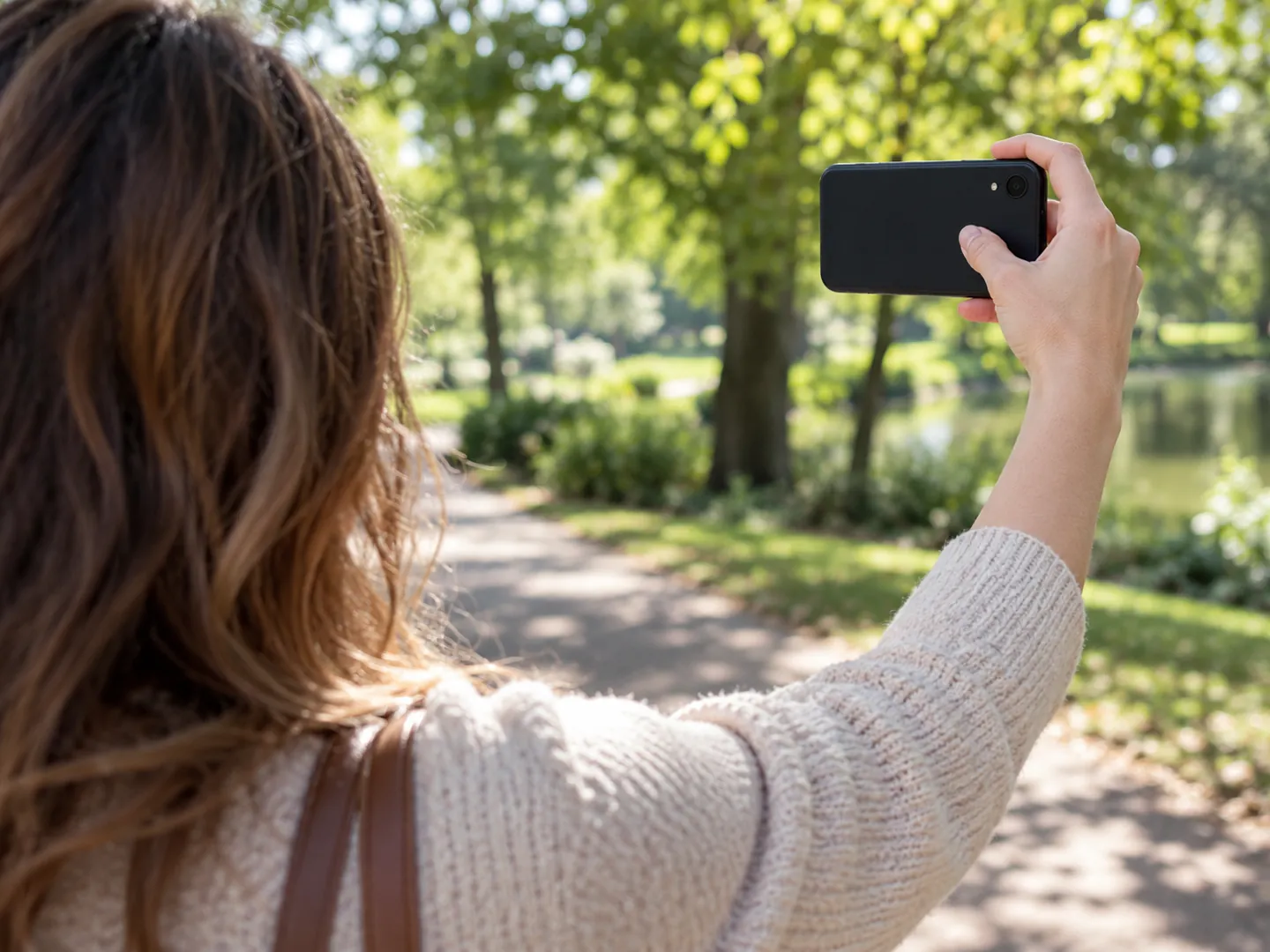
Ward's model found the close-up stretch fades with distance and is essentially gone at about 5 feet. A timer or a friend helps.
View a photo both ways. If the flipped one feels more like you, that is the familiar mirror view, not a better face.
White and colleagues found strangers picked profile photos that made better first impressions than people's own picks.
We tend to warm to faces we see often. A view that looks odd at first can feel more normal with repeated viewing.
WHY WE MISJUDGE OURSELVES
Epley and Whitchurch morphed photos of people's faces to look more or less attractive. People were more likely to pick an attractively enhanced version from a line-up as their real face, and spotted it faster among other faces.
The same bias appeared for a friend's face but not for a relative stranger's. So when a plain photo of you feels like a let-down, part of the gap may be the flattering picture of yourself you already carry in your head.
Questions
A mirror shows your face flipped left to right, and that is the view you know best. A photo shows the unflipped view others see, which can feel unfamiliar to you.
According to a 2018 geometric model by Ward and colleagues, yes at close range: at 12 inches the nose looked about 30% wider for men and 29% for women relative to the face, with essentially no difference at 5 feet.
In the 1977 study by Mita and colleagues, as summarised in Psychology Today, friends preferred the true, unflipped image while the people themselves preferred their mirror image.
White and colleagues found self-chosen profile images gave less favourable first impressions than images chosen by strangers, so a second opinion may help.
Psychology Today links the 1977 finding to the mere exposure effect, the consistent finding that we feel more comfortable with and favourable towards things we see frequently.
Sources
ABOUT THIS NAME
doodlephotos.com is part of the DoodleSale portfolio. It isn't in an auction right now, but you can ask about leasing it.